
01 · Judgment
I read the game being played.
Most people repeat the headline. I read the rules, the incentives and the causality underneath, then play the permutations forward.
Consultants study the zoo. I go into the wild.

Operator · Strategist · Consigliere
Order is a practice.
Business isn't a morality play. It's mechanics, and I've worked every part of the machine, from the C-suite table to the dish pit. I tell you the truth fast, even when it costs me.
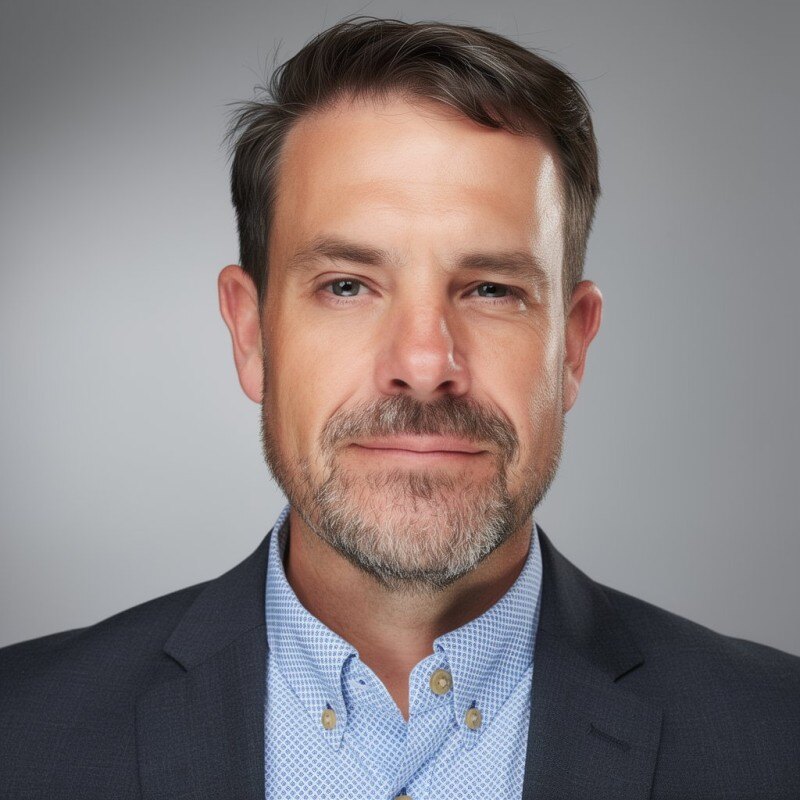
Same mechanics, same deliverable. Two different rooms. Pick the one you're standing in.
Every engagement ends in the same place. Not a deck. Not a report. A playbook. Each play ties a named cause to a measured improvement. If it can't name both, it doesn't go in the book.
The test of my work is what happens after I leave.
A successful one makes more than it costs to run. That's it. People make it harder than that. It isn't.
The machine has parts: leads, the funnel, the close, fulfillment, feedback. Then come the people and processes that run each part. When one part fails, the whole thing shakes. When you can see which part, you can fix it.
The machine doesn't lie. The press release does.
The wins, in order. The same process holding up across a motorcycle floor, a bakery, a race-harness shop in England, a solar company and a restoration contractor.
Why you'd trust me, what I've proven, and what I believe. Read them in any order.


Whether you run a two-truck shop or a portfolio of companies, the machine runs on the same mechanics.

Ethos · why trust me
Business isn't a morality play. It's mechanics, and I've worked every part of the machine, from the C-suite table to the dish pit. I read the game, not the headline. I tell you the truth fast, even when it costs me. And I'm here to do three things: turn skill into ownership, turn stress into systems, and turn good companies into great ones.
I get to the answer fast. Sometimes it takes a few weeks to land. That's fine. I'll still be here.
Aristotle said an audience trusts a speaker for practical wisdom, character and goodwill. Here is mine, with the receipts.
Most people repeat the headline. I read the rules, the incentives and the causality underneath, then play the permutations forward.
Consultants study the zoo. I go into the wild.
Business is emotionless. I'm not. I don't moralize, and I don't judge legal adult choices. But I have hard lines: I won't profit from people who can't say no, and I won't spend someone else's trust.
Margin is what makes ethics affordable.
My goodwill is practical. I want the owner's best outcome ahead of my own, and I deliver it by fixing the machine, not with pep talks.
I was a director over more than 600 franchisees. I was expected to keep promising them tools and programs I had already built, which leadership had shelved and never intended to release.
I wouldn't say it. I resigned, and I put the reason in writing, by certified letter, to the entire C-suite and franchise leadership.
Owners bet their families on what they're told. I don't spend that trust for anyone.
I'm usually early. You'll hear what I said again in a few weeks, in your own voice.
Called the 2008 real estate collapse.
Four years before the headline.
Told a motorcycle dealer that a used-bike e-commerce system would change his life.
He built it and became the #1 dealer west of the Mississippi.
Read Bitcoin as a game designed by the people who wrote the rules.
At the expense of the people invited to play.
From the C-suite table to dishwasher in a corporate franchise restaurant. I know what each part of the machine costs when it breaks.
Markets where families have run the same trade for six generations. Sometimes the opportunity isn't a startup. It's serving the giant, or changing it from the inside.
Short enough to remember. Strict enough to cost something.
An owner's hardest work doesn't look like work. It looks like thinking, because it's the part no one else can do.
The tradesman: 20 years mastering a craft, ready to go from nothing to something.
You spent 20 years mastering a trade. Nobody taught you to own. That's what I do.
The Build track → 02 · FIX ITStress into systems.The stuck owner: the business runs him, and the stress is constant.
I take the weight off by fixing the machine, not by giving pep talks.
The Fix track → 03 · SHARPEN ITGood into great.Ownership groups, family businesses, PE-backed and corporate teams.
Fresh eyes, no politics, no sacred cows. Most advisors see the business you present. I see the one you run.
The Sharpen track →
Logos · what I've proven
Opinion is free. Proof is earned. This page is mine: the logic I run, and what it's done.
Heraclitus said everything flows. The Stoics built tools to find the order underneath it. I build businesses the same way.
There's always chaos. Usually one or two people are holding it all together while a dozen others pull it apart without knowing it, through ego, pride, habit, or just not seeing the storm.
If your people don't see the chaos, they are the chaos.
That's not cynicism. That's the forecast. Pilots don't resent weather. They plan for it.
Your turn: who are the one or two holding your business together? Do they know you know?
So I never start with the website, the ads, or the org chart. I start with the person at the top, because when the owner starts thinking, planning, and forecasting correctly, everything follows. People change. Processes change. Not for politics. For the health of the business.
My first question is always the same:
Why are you doing this?
The honest answer is money. Not because money is everything, but because money pays for everything else you actually want: family, freedom, time, legacy. Ownership scales wealth like nothing else. A job can't do it. An index fund can't do it.
If the answer is anything else, I listen closely. "For my family." "My dad did it." Those are real. They're also where owners start lying to themselves.
Greed is a behavior. Money is a mechanism.
Greed takes no matter what. Money can be earned: by doing good work, by treating your people well, with enough left over for everyone. That's a hard line, and I live on the right side of it. And when the mission starts making the business decisions, that isn't generosity. It's a leak.
Your turn: answer the question in one word. Then ask if your business is built for that word.
A successful one makes more than it costs to run. That's it. People make it harder than that. It isn't.
The machine has parts: leads, the funnel, the close, fulfillment, feedback. Then come the people and processes that run each part, reviewed weekly, monthly, quarterly, yearly. When one part fails, the whole thing shakes. When you can see which part, you can fix it.
The machine doesn't lie. The press release does.
Once you understand the mechanics, hype is easy to spot. Every so often a long shot hits on momentum and timing. I'll congratulate them. But lightning isn't a strategy. When the storm passes, a few people are holding the bag and everyone else goes home poorer.
Logic can't predict lightning. It predicts what's left when the storm passes.
Reading people isn't a gift. It's a lifetime of watching how people communicate, why they communicate, and how they learn. Do that long enough and you notice the moment a story bends.
When something's off, I don't shout. I work in order:
I can find the truth. I can't make anyone act on it.
That's why I start with the owner.
And people, and you don't see them until you leave where you are. I've worked in 48 countries. Every market has families who've run the same trade for six generations. Those moats are real. If you go after them, it's never just money you're up against. It's relationships, power, politics, and law.
You can level up. Some levels are closed by design. Knowing which is which is part of the game. Above Main Street there's another layer: debt, capital, equity. That's where most wealth gets made, and most owners never see behind the curtain.
Most owners build the business. The layer above them builds the wealth.
That's why I'm building MSSX, the Main Street Stock Exchange: to bring the tools and levers of that upper layer down to Main Street owners. It'll be slow at first, and painful in places. But owners deserve to see behind the curtain of how real wealth gets made.
Your turn: are you competing at a level you can win at, or one that was closed before you got there?
Owners learn on the fly. They pay "specialists," learn the specialist wasn't special, learn to do it themselves, then go looking for the next one. Even the smartest, hardest-working owners get kneecapped by one wrong hire.
Most owners start owning before they're ready to own.
My own expensive lesson was never in the machine. It was in the partners. Most of my partners weren't the smartest in the room. They brought the money. Some used my skill for their benefit. Even the good ones, people who'd succeeded on their own, couldn't keep up once the situation changed. They wanted the final vote, but not the work.
Money always wants a vote. Control without involvement is the most expensive capital there is.
So I don't sell votes anymore. I license value, performance-based. Win-win or nothing.
Five wins, one rescue, two that still hurt. Each card shows the headline and one number. Open any of them for the full report.
Revenue or sales after, divided by before. The exact figures are on each card, because you'll want to do the math yourself.
Ceiling And Visibility Unlimited: the pilot's call when the weather clears.
I've sat in every seat: technical, marketing, brand, operations, accounting, tax. On the good side, the bad side, and the middle. CAVU is the process I've run for years, now built into a system.
It starts with the owner and works down. It scores every zone of the machine green, yellow, or red, so the owner sees where the chaos lives and decides what to do about it, with a little help.
I don't make your decisions. I make them visible.
Neither one is the real page. Pick the room you're standing in.

Whether you run a two-truck shop or a portfolio of companies, the machine runs on the same mechanics. This is one way to skin the cat. It's the one that's worked.
Mythos · what I believe
You do what you can with what you've got.
We live in a matrix of time, money, skill, and network. You can break through, but there's always a price.
Every owner, every worker, every executive lives inside the same four walls. Most people spend their lives pushing on the wrong one. The work is knowing which wall to push on, and what it's going to cost you.
I don't pay the price by taking what I didn't earn. I pay it in value. That's the only trade I'll make.
I was seven or eight, selling lemonade in the front yard. Somewhere in the middle of it, I realized the hard part wasn't the lemonade. It was getting someone to stop. Once they stopped, I could serve them more. So I added cookies. Then brownies.
Nobody around me understood it. It just made sense. I didn't have words for it yet. I just saw the machine behind the transaction. I still do.
A business is a machine. Sales is the gas. Neither exists without the other.
In my early twenties, I trusted people who needed me and used me, instead of leading. Nobody had shown me how to lead, and I hadn't cared to learn. A gift without leadership just becomes someone else's asset.
No one will ever want more for you and your family than you do.
I traded a conventional life for something else. No early family. No single career. Instead: decades of work across dozens of industries, aviation, marine, automotive, construction, marketing, finance, and 48 countries.
You don't know what doors are open until you get out from behind the one you're in.
I've stood on both sides of the line most people never cross. That's how I can see the worst case before it happens, and help you avoid it. There's no wrong answer. There's only the wrong one for you.
Owners own. Workers work. If you want to own, have a plan to stop working. If you want to work, don't own.

I don't study kings. I study systems. I don't respect head starts. I respect the marathon: the owner or the worker who keeps showing up and understands what consistency compounds into. If that's you, you're already the hero of this story.
Observe to choose the race. Wear blinders to run it.
Take the ones that fit. Each card copies clean, so you can send it to the person who needs it.
A myth is only worth something if it holds up in the real world.
Some people read me as abrasive. But the variables change. That's why I watch. Observe to grow applies to me, too.

Whether you run a two-truck shop or a portfolio of companies, the matrix is the same. The walls are the same. The price is the same. Bring value. Run the marathon. Let's find out which door you're behind.

Portfolio · what I'm building
I'm an operator first. These are the businesses and platforms I own, run, or am building right now.
Only own what you can care for.
For owners · two-truck shop to 200-person family business
The skill that got you here is the job you have to leave. I help owners make that trade, and I leave behind a playbook your team can run without me.
I don't make your decisions. I make them visible.
The organization doesn't know itself. Only the owner does. When the owner thinks, plans, and forecasts correctly, everything below follows.
From the C-suite table to the dish pit, plus technical, marketing, brand, operations, accounting, and tax. I know what each part of the machine costs when it breaks.
So I can say what needs saying, and you can actually hear it.
Paid as a consultant. Showing up as your fan, your friend, your consigliere.
Three tracks. One of them is yours.
The test of my work is what happens after I leave.
Every engagement ends in the same place. Not a deck. Not a report. A playbook. No recommendations. Plays.
If a play can't name its cause and its measure, it doesn't go in the book.
One question first: why are you doing this? We build the plan around the honest answer.
Every zone of the machine scored green, yellow, or red: leads, funnel, close, fulfillment, feedback, people, cash.
Plays ranked by cause and payback. Red zones first.
We run the first cycle together, then your team runs it on the review rhythm. You keep the book.

Start where every engagement starts: with you.
For PE, family offices, ownership groups, corporate leadership and boards
When capital walks into the room, people perform. They tell you what keeps their job. I walk in at any level, apply pressure in the right places, and the real data comes up. Then I turn it into plays your operators can run.
Capital isn't the enemy. Misaligned capital is.
If someone knows how to listen.
Owner readiness, culture risk, where the chaos actually sits, and who's really holding it together.
Owner, operator, equity holder, director over 600+ franchise locations. I know what the deck leaves out because I've written the deck.
Aviation, marine, automotive, construction, manufacturing, energy, food, finance. Pattern recognition travels.
I'm not angling for a seat or a budget. My only agenda is the outcome you underwrote.
You underwrote a plan. I make it visible whether it's working, and why.
Same deliverable as every engagement I run. Not a deck. A playbook. No recommendations. Plays. Every play has five parts: the cause, the move, the owner, the measure, the clock.
Hover or tap a cell. This is the view an operating partner gets every quarter.
3 red zones across the portfolio · 2 in Company C
Engagements can be embedded, where I join as part of the team, sanctioned by ownership, or advisory.

Diligence, integration, or a portfolio company that's stopped climbing. Let's find where the chaos sits.
Find your chaos · 60 seconds
Answer for the business you run, not the one you present. The gauge moves as you go. Nothing is stored or sent.
Start a conversation
Not the pitch. The real version. Whether you run a two-truck shop or a portfolio of companies, the machine runs on the same mechanics.
Or write to me directly: tad@tadtimothy.com